What is a silver diya, and how do you choose one?
A silver diya explained: the shapes (cup, standing, pedestal, stem, peacock, jaali), how weight shows size, and what 925, 830 and 800 mean on each diya's page. With the diyas held in Melbourne. From ARKH.
ARKH · 10 November 2026 · 10 min read
Most silver diyas are sold by the picture. This guide goes the other way: it starts with the things you can check, the weight and the purity, and then the shape. It uses the diyas we hold, each with the figures its own page gives. The same diyas come round for Diwali, for Dhanteras, for a puja at home, for a housewarming and as a gift, so nothing here depends on a date.
What a silver diya is
A diya is a small lamp with a cup that holds oil and a wick. Silver diyas are made to stand on a puja shelf or a mandir, and they are bought to keep. What separates one from another is not much to do with the cup. It is the shape it stands on, how much it weighs, and how much silver is in it. Our pooja shelf lists them all, each weighed with its purity stated.
The shapes we hold in Melbourne
Eleven diyas are on our shelf in Melbourne. Here they are by shape, from the plainest to the most worked. The weight and purity beside each name are the figures on its page.
Cup and star
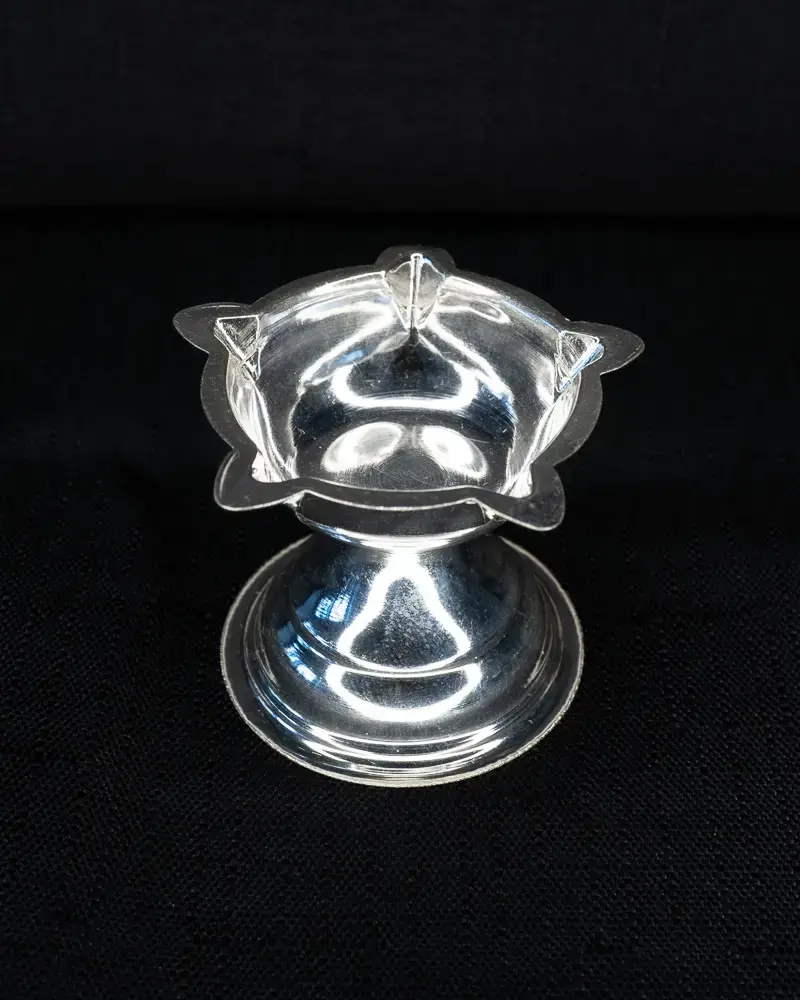
The simplest diya is a cup on a foot. The Cup Diya (9.9 g, 800 silver) is that shape, plain and polished. The Silver Cup Diya (12.1 g, 830 silver) is also a cup, with a pointed lip and a stepped base. The Star Diya (8.2 g, 800 silver) is the lightest we hold: its cup is star-shaped.
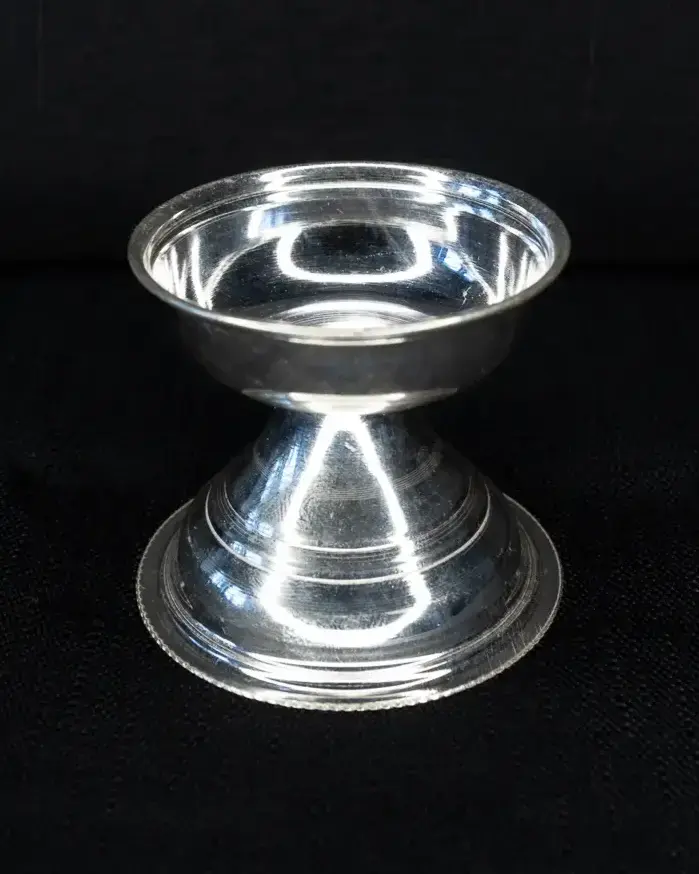
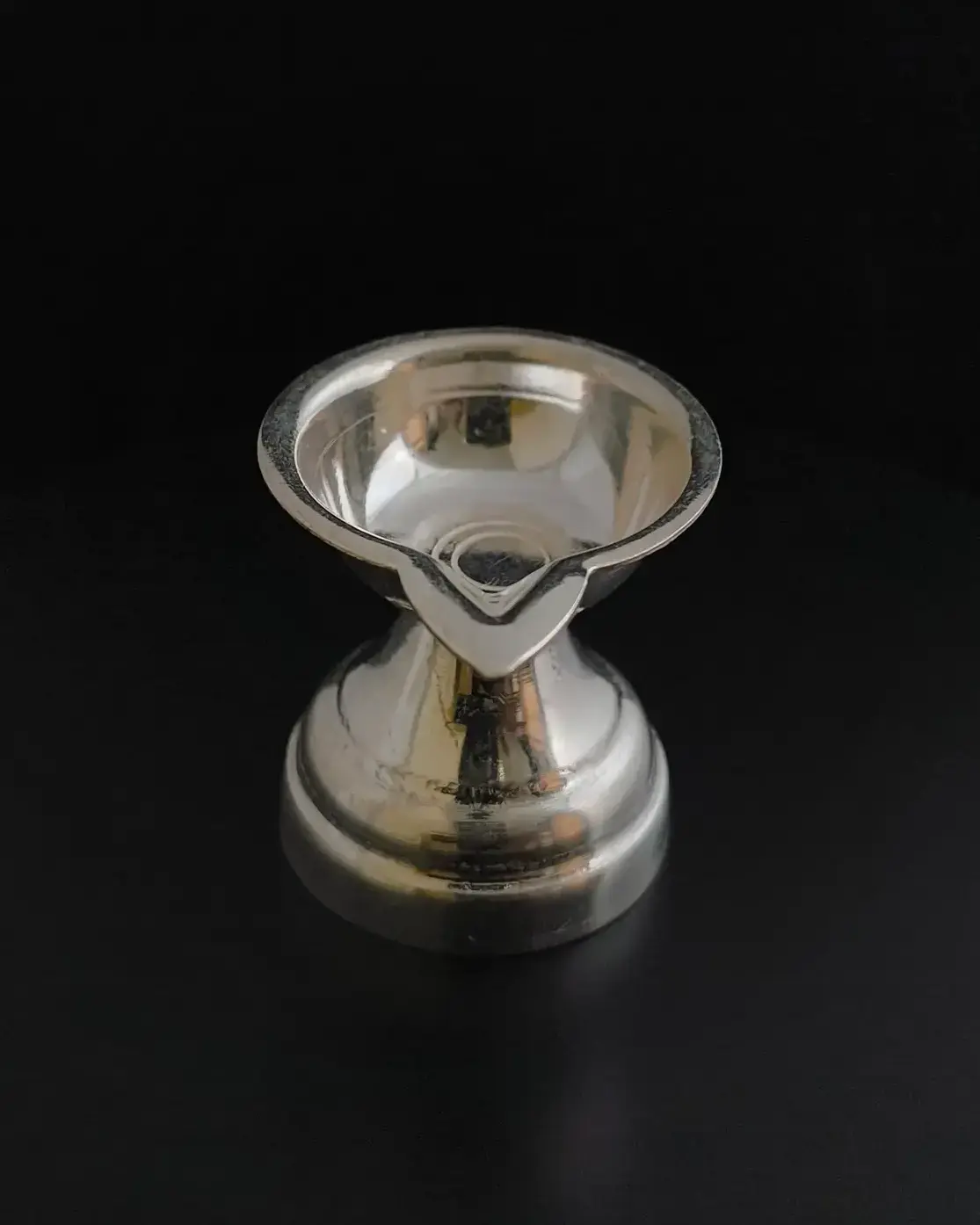
Cup and star diyas, held in Melbourne
Standing
A standing diya lifts the cup on a stem. The Spouted Standing Diya (15.7 g, 800 silver) has a spout on its cup and a turned stem. The Tall Standing Diya (22.3 g, 800 silver) carries a wide, flat-rimmed dish on a tall turned stem. The Silver Tall Diya (23.6 g, 830 silver) sets a flared dish on a plain tall column.
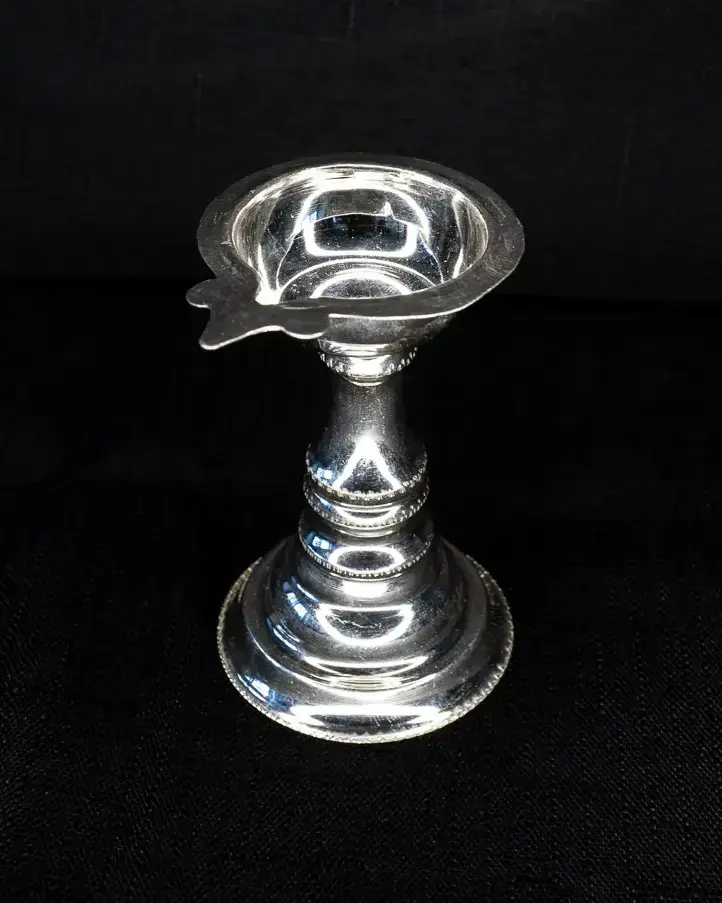
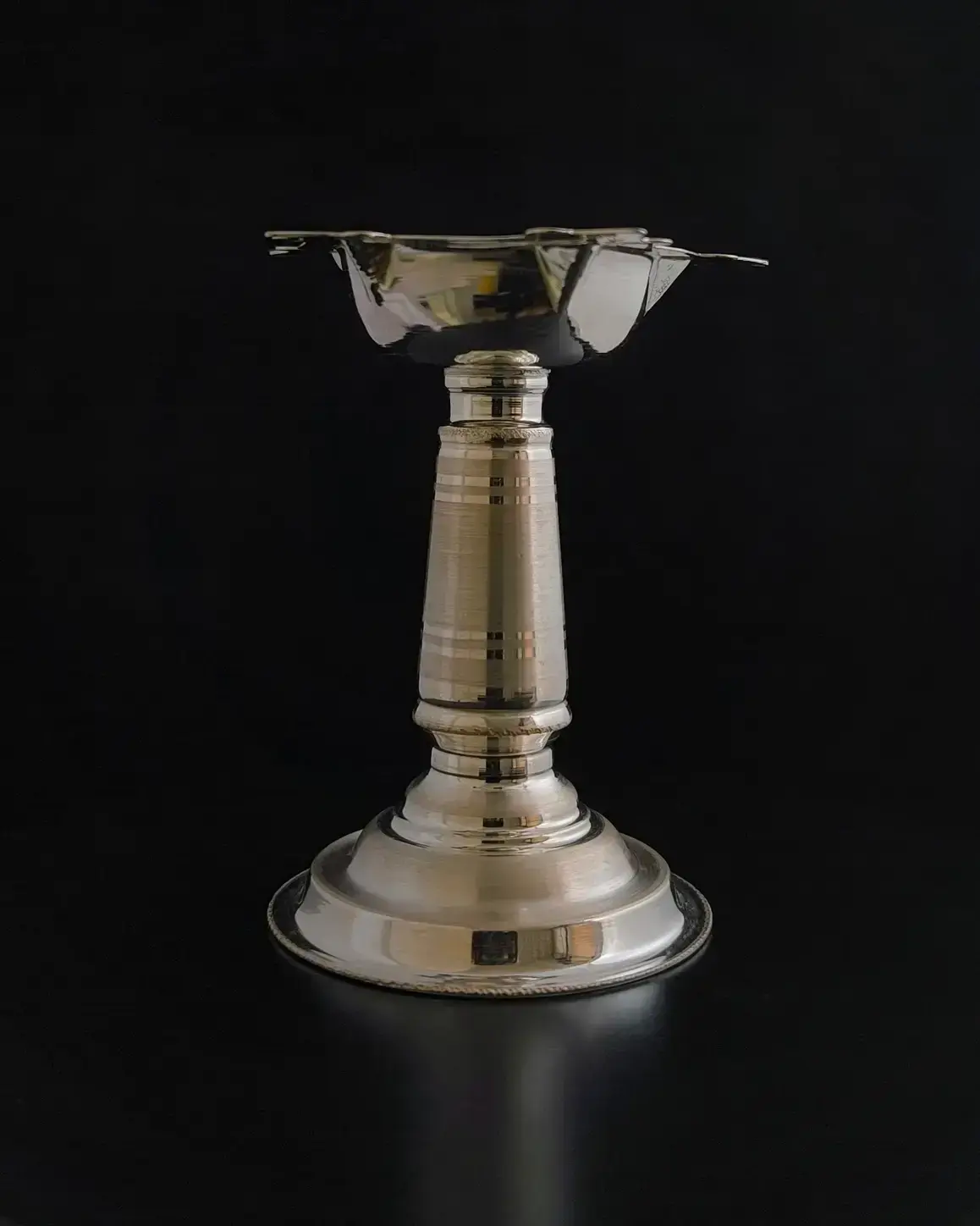
Standing diyas, held in Melbourne
Pedestal, stem and scalloped
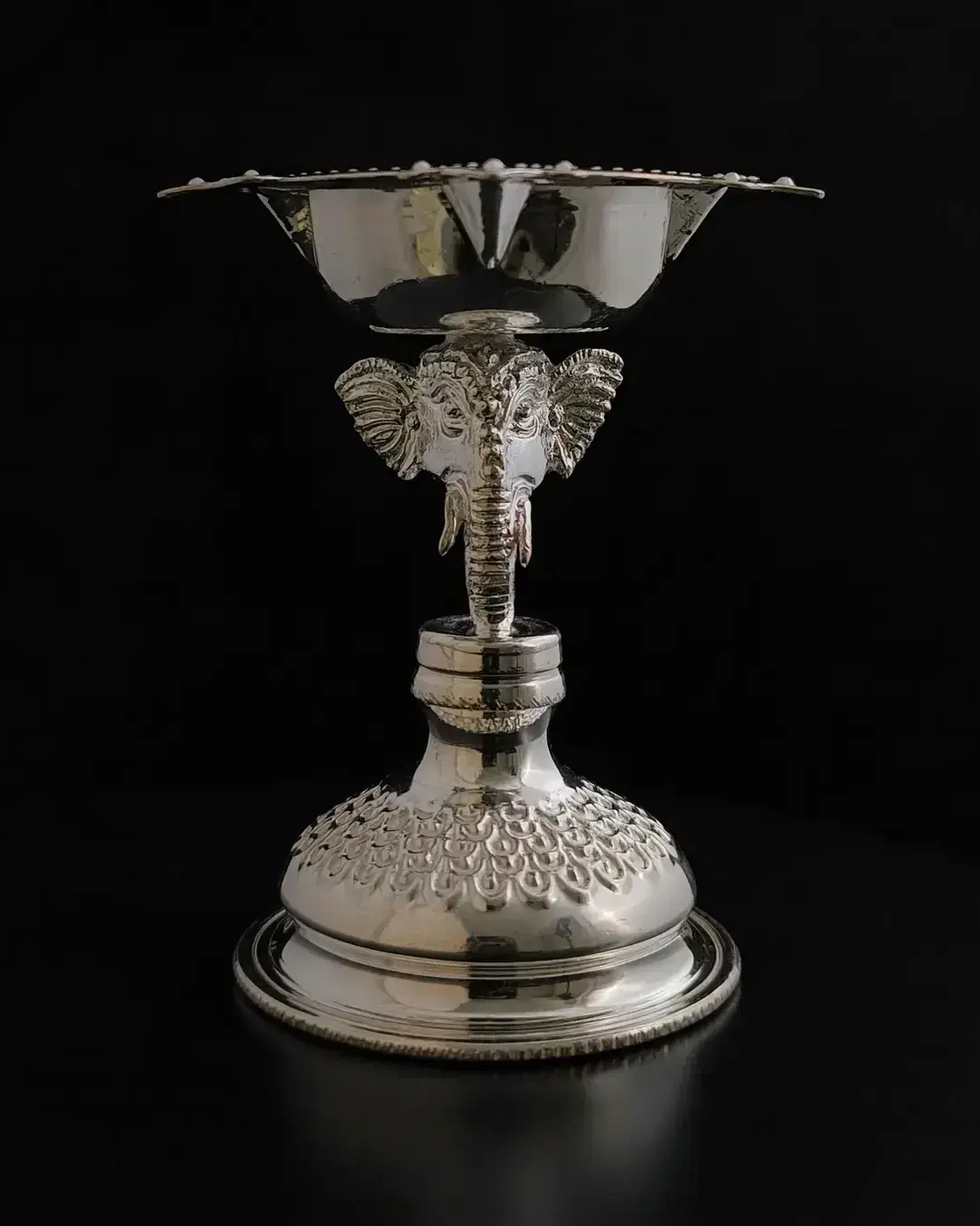
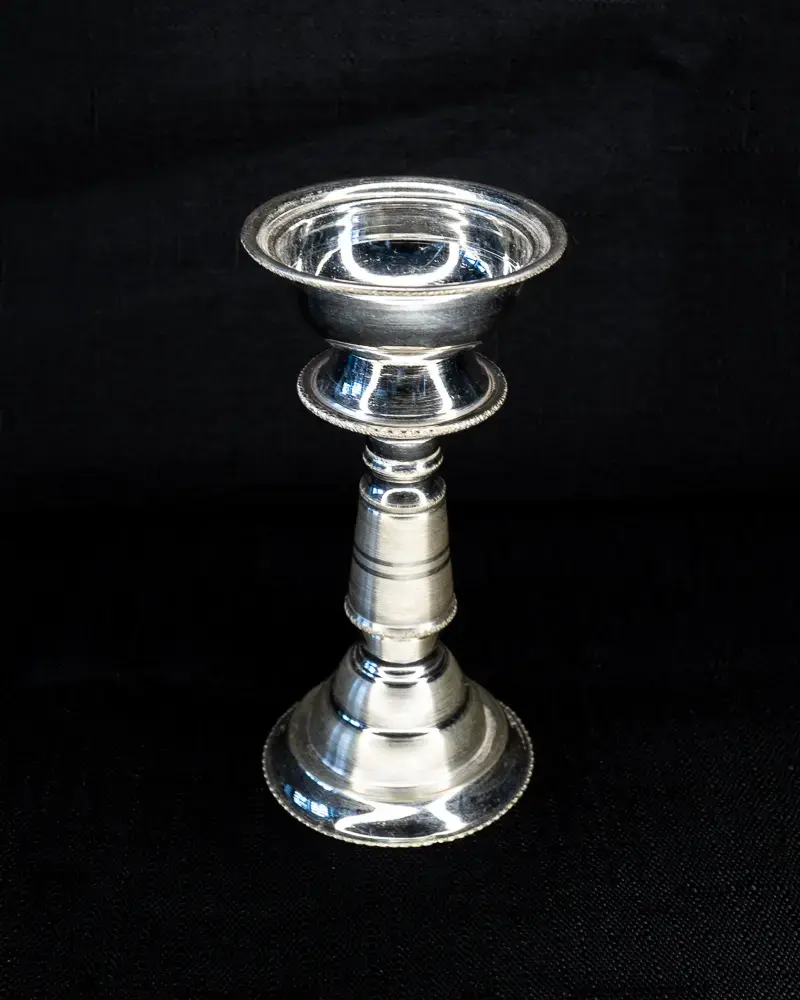
These three have more to look at. The Silver Pedestal Diya (17.2 g, 830 silver) is a fluted dish on a tiered pedestal. The Silver Stem Diya (35.5 g, 830 silver), the heaviest diya we hold in Melbourne, carries an elephant’s head on its stem. The Silver Scalloped Diya (27.7 g, 830 silver) is a scalloped shell of a dish with an arched figure behind it.
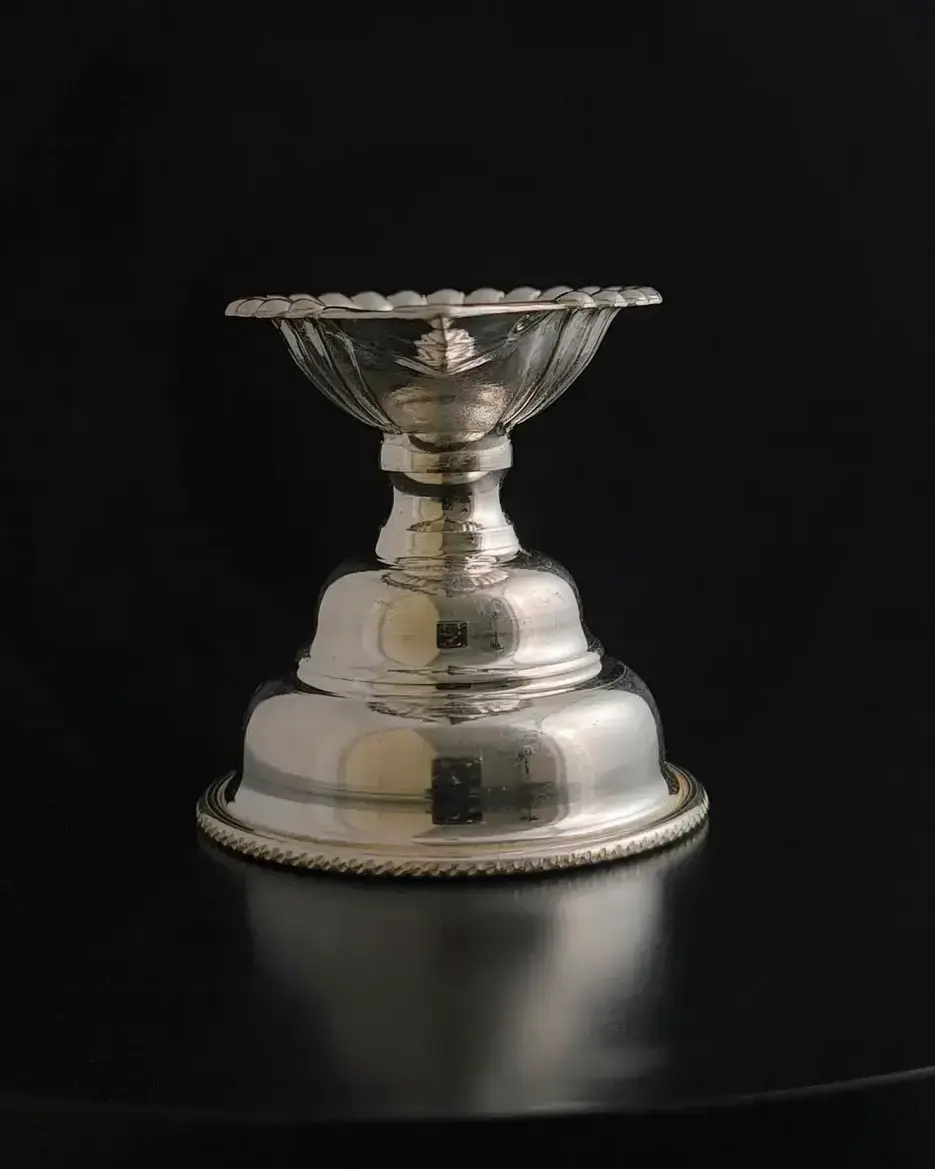
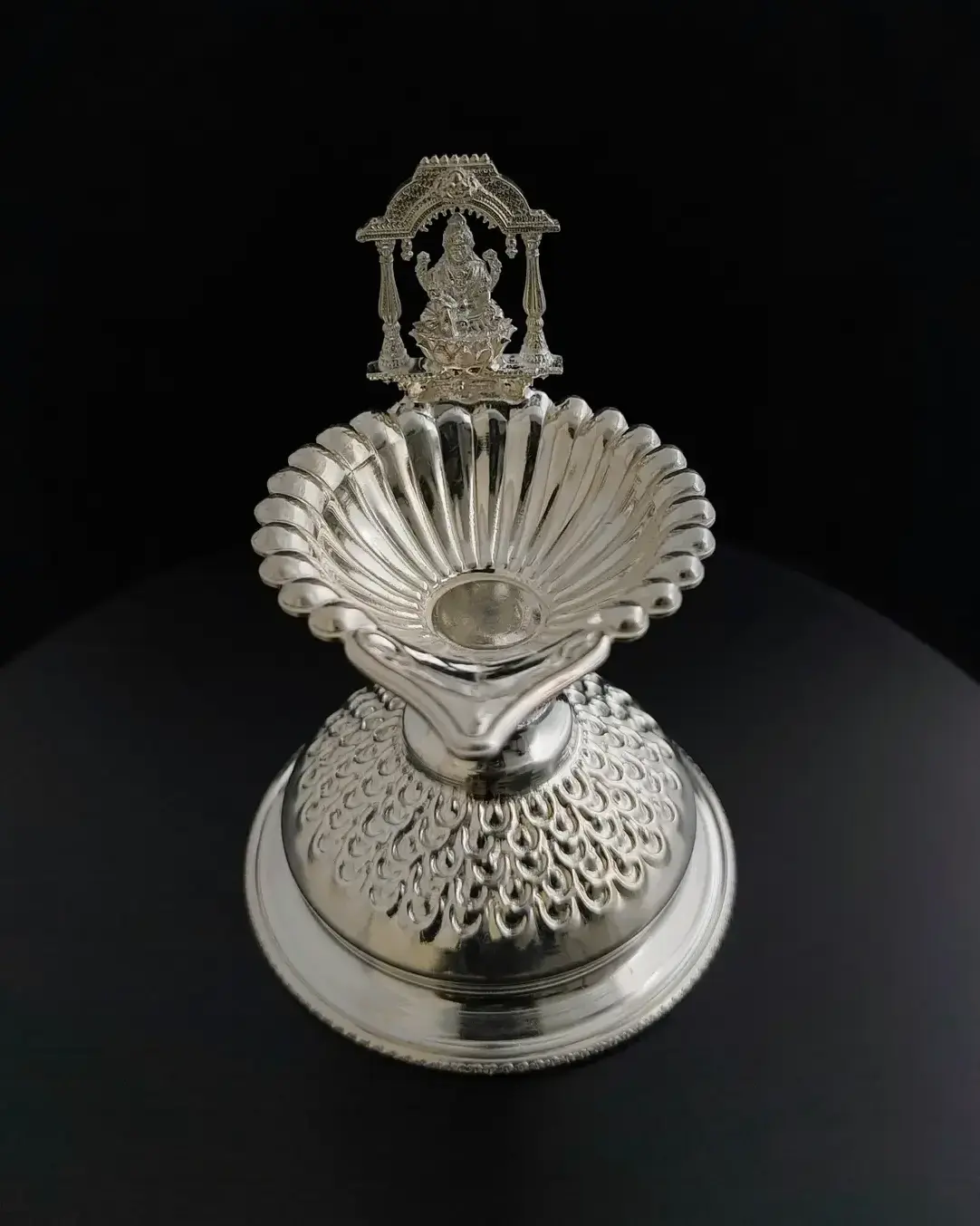
Pedestal, stem and scalloped diyas, held in Melbourne
Peacock and jaali
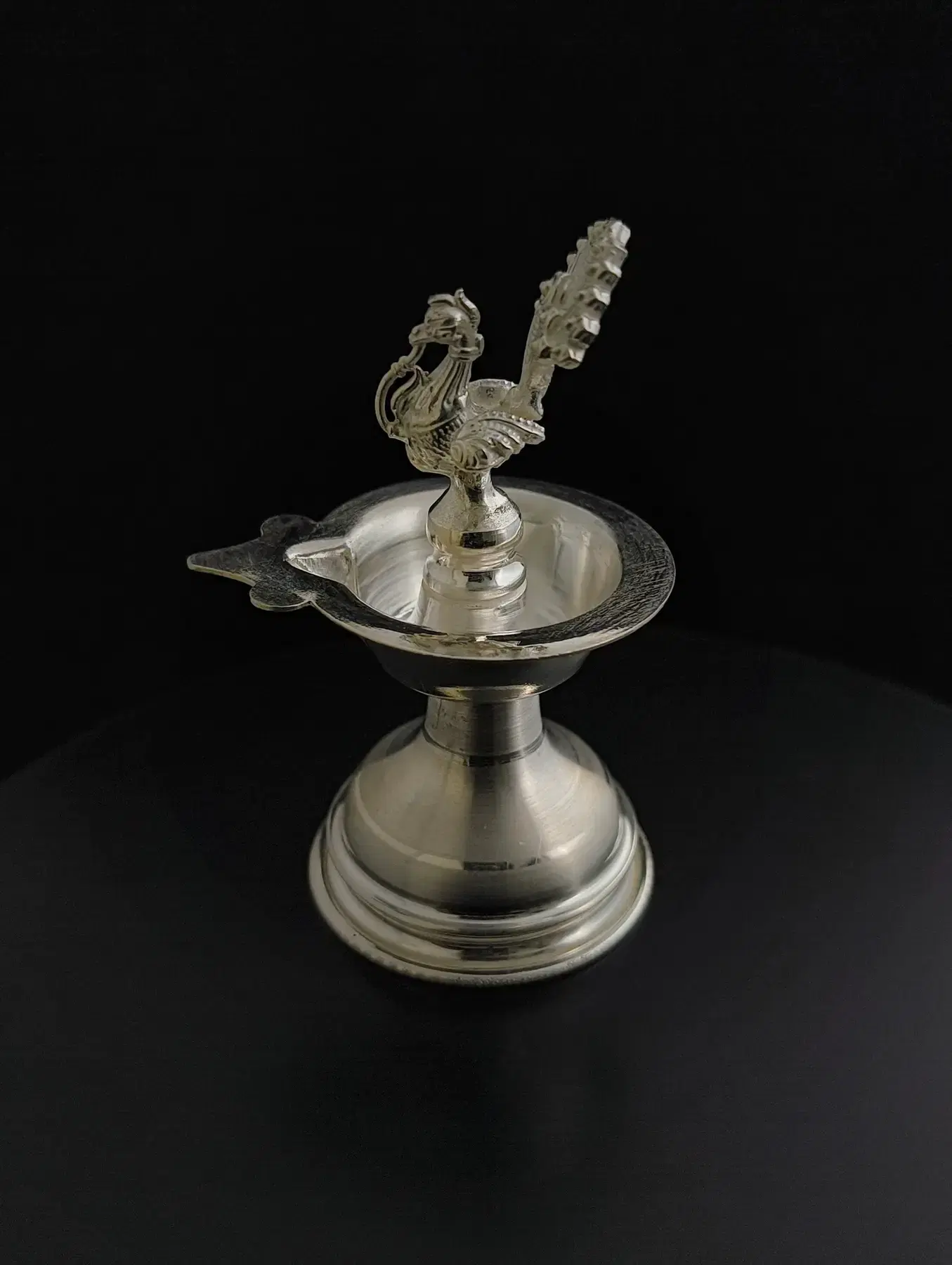
The Silver Peacock Diya (22.4 g, 830 silver) is a standing diya with a peacock, its tail fanned, rising from the dish. The Silver Jaali Diya (29.0 g, 925 sterling silver) takes its name from jaali, the pierced lattice work found in Indian screens and metalwork: its foot is worked in that pattern. It is the only diya we hold in Melbourne at 925.
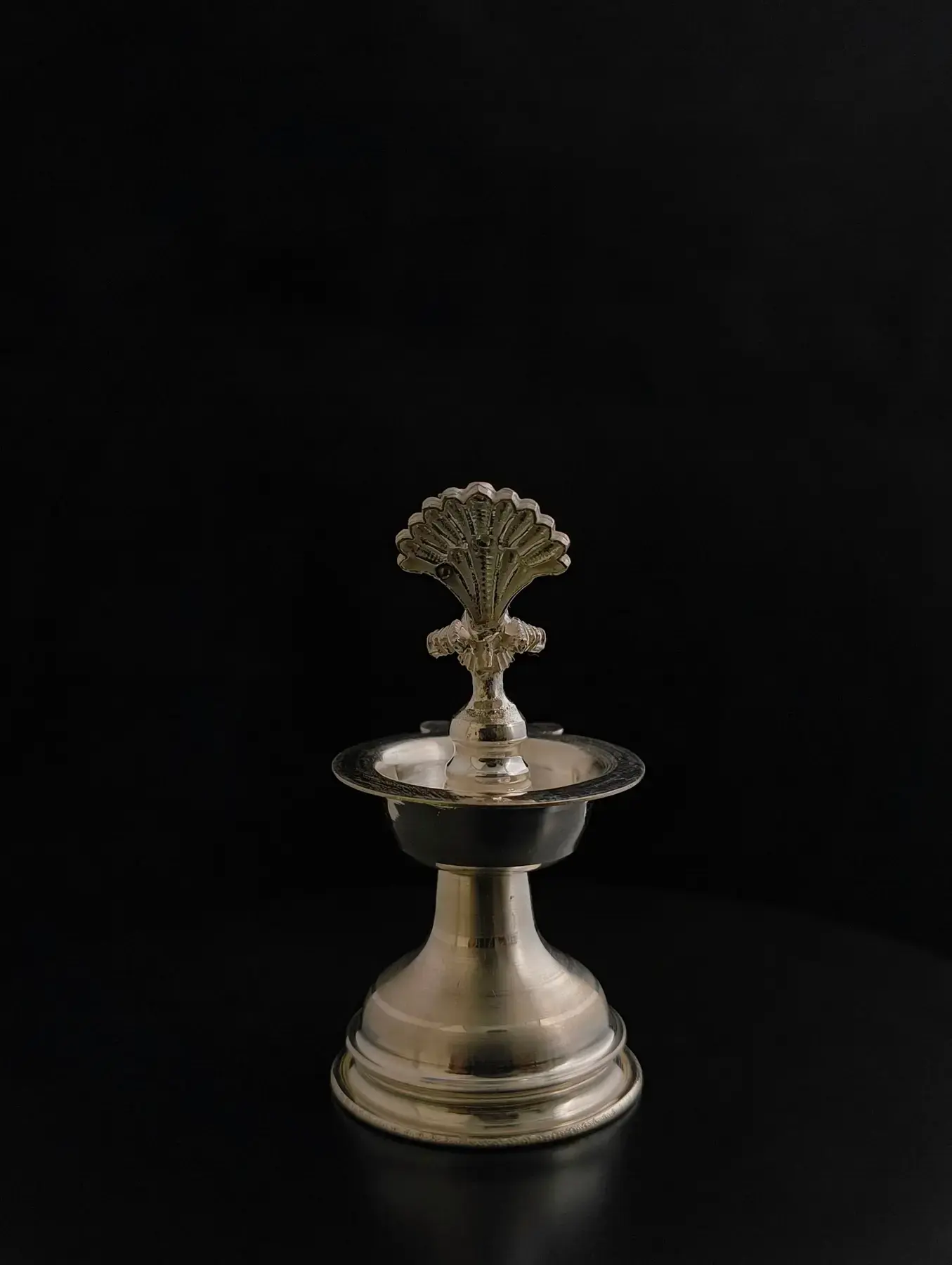
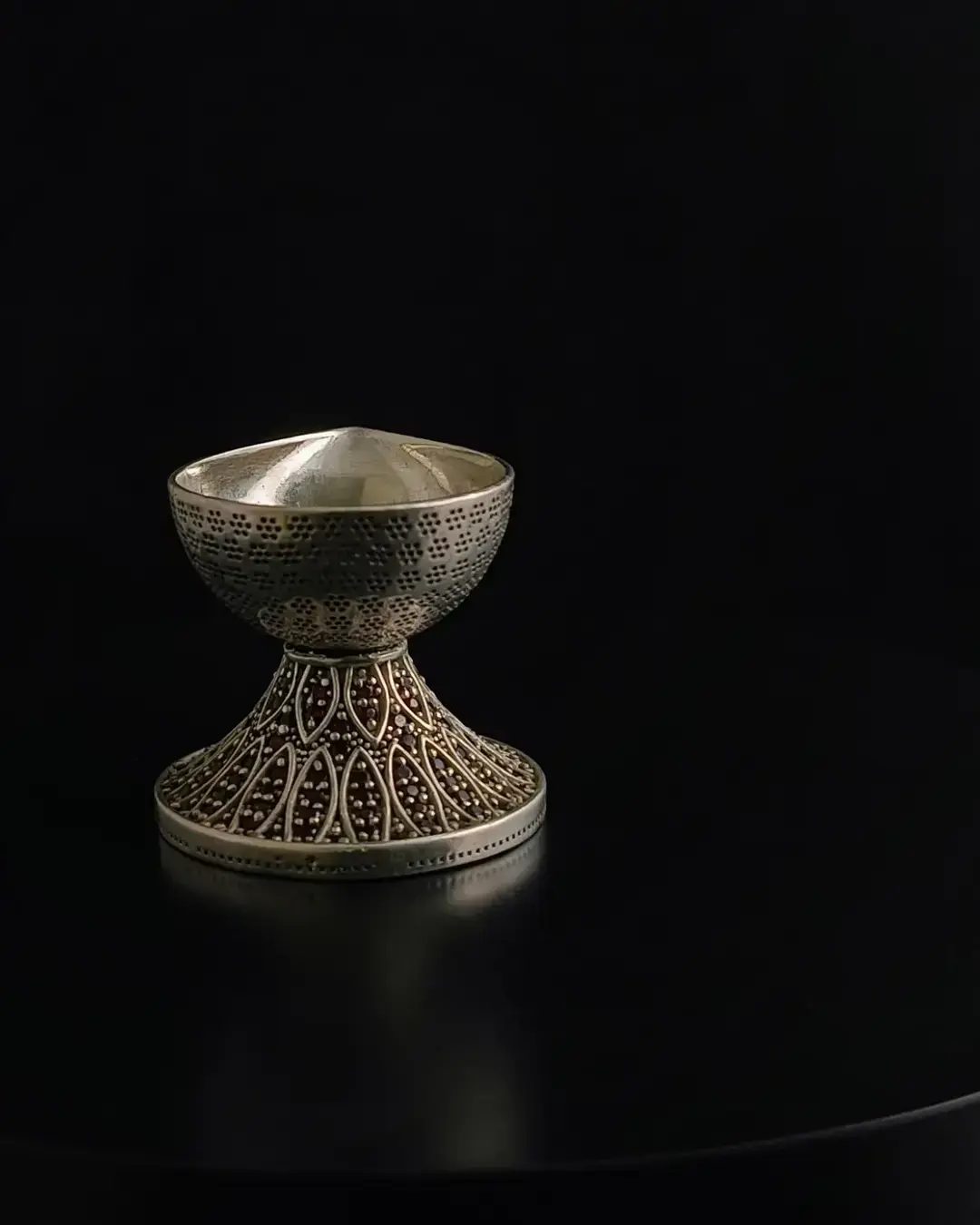
Peacock and jaali diyas, held in Melbourne
Weight is the number you can carry to any other seller and compare.
Weight is size
We do not quote heights. The last photographs on each product page show the piece against a ruler and in the hand, so you see the size instead of reading it. Weight is the number beside them, and it is measured on the finished piece. Across the diyas on our shelf it runs from 8.2 g for the Star Diya to 214.2 g for the Temple Diya from our counter, which is about 26 times as much. Our Heritage page explains why a jeweller shows the weight, in the section headed “A jeweller shows the weight”.
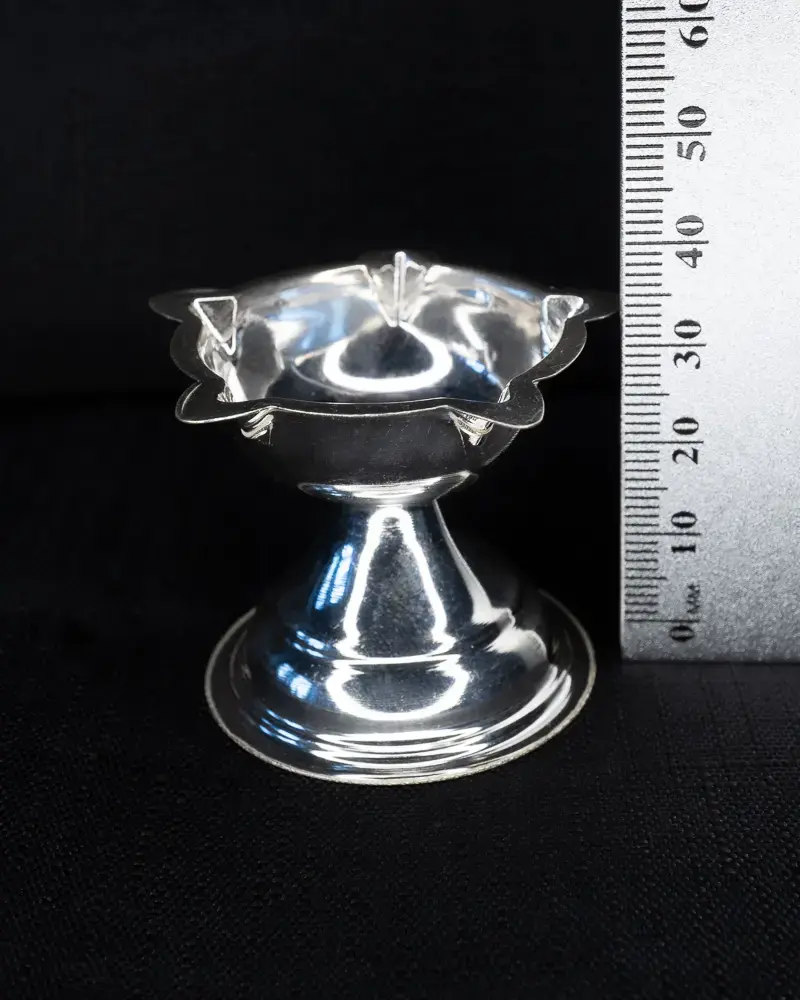
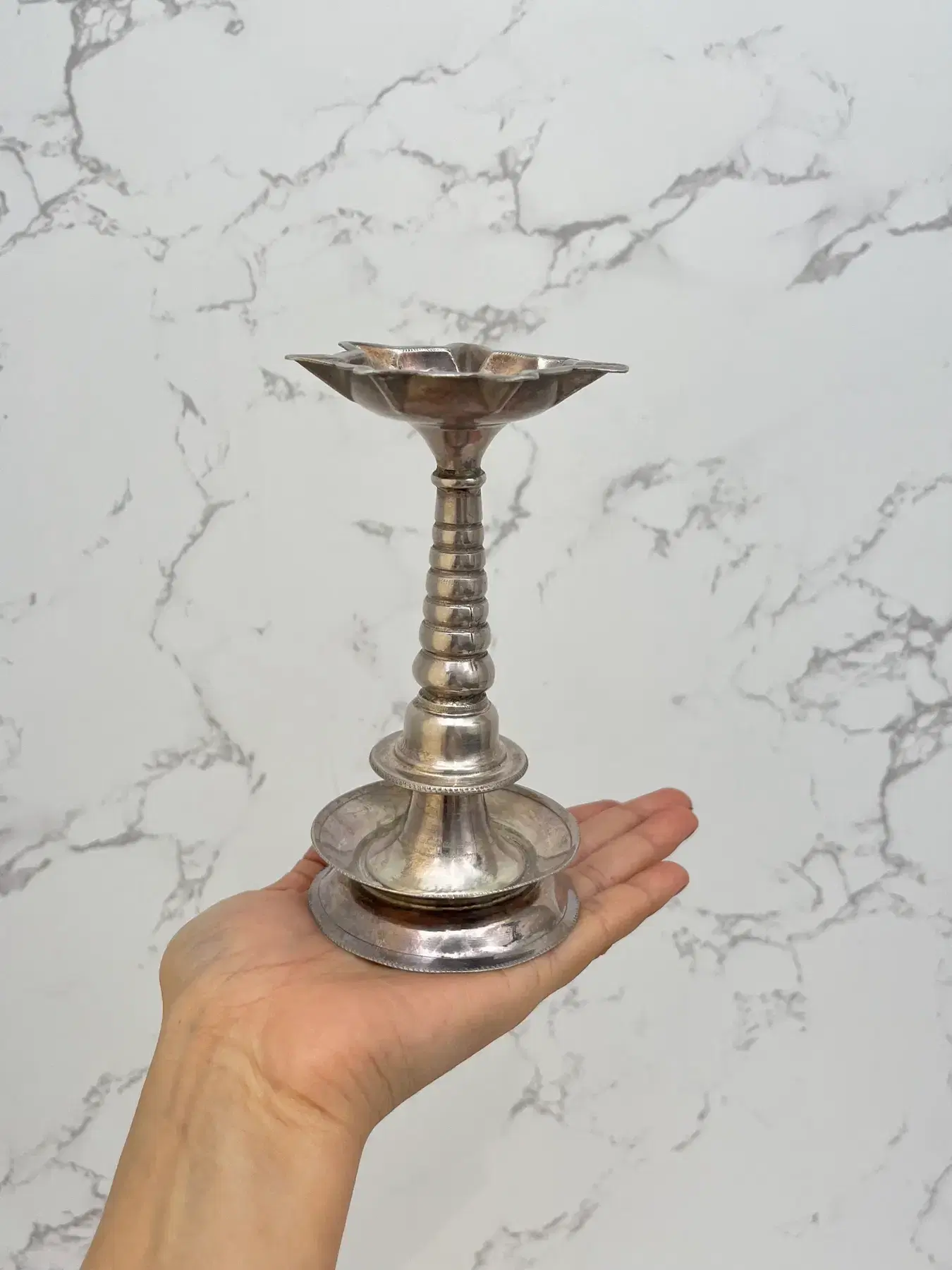
Light to heavy, the diyas we hold in Melbourne:
- Star Diya, 8.2 g, 800 silver
- Cup Diya, 9.9 g, 800 silver
- Silver Cup Diya, 12.1 g, 830 silver
- Spouted Standing Diya, 15.7 g, 800 silver
- Silver Pedestal Diya, 17.2 g, 830 silver
- Tall Standing Diya, 22.3 g, 800 silver
- Silver Peacock Diya, 22.4 g, 830 silver
- Silver Tall Diya, 23.6 g, 830 silver
- Silver Scalloped Diya, 27.7 g, 830 silver
- Silver Jaali Diya, 29.0 g, 925 sterling silver
- Silver Stem Diya, 35.5 g, 830 silver
The Star Diya is the lightest, and the Silver Tall Diya weighs nearly three times as much. In a photograph two diyas can look alike; the ruler and the weight are what tell them apart.
Purity: what each diya’s page says
Our guide to telling real 925 silver explains what the numbers are. For diyas, the point is that the number is not the same on every piece, and each page states its own. Of the 11 we hold in Melbourne, one is 925 sterling silver (the Jaali), six are 830 silver and four are 800 silver. The diyas from our counter in Meerut whose pages state a purity are all 925 sterling silver.
The number is parts of silver in every 1,000. So 830 is 83% silver and 800 is 80%, against 92.5% for sterling. They are silver with less silver in them than sterling. We do not call them sterling, and the page says 800 silver or 830 silver. What it changes for you: two diyas of the same weight and different purity do not hold the same amount of silver, and the 925 one holds more. That is why the purity is worth reading before the weight, and why we put both on every page. Each piece is hallmarked.
There is a good side to a lower number, and it is strength. Silver on its own is soft, so it is mixed with a harder metal to make something that holds its shape. A diya is picked up, carried, set down and wiped again and again, so a firmer metal suits it. 800 and 830 silver carry more of that harder metal than sterling does, which makes them sturdier and more resistant to dents and scratches in daily handling. They are still real silver with the silver content stated on the page and a hallmark on the piece. If you want the most silver in the piece, choose a 925 diya; if you want a diya built to be used, the 800 and 830 ones are made for it.
Larger diyas, from our counter in Meerut
Fourteen more diyas on the shelf come from our own counter in Meerut. They run from about 11 g to 214.2 g, and they are price on request: you ask on WhatsApp or by email, and we confirm availability and the price. The heavier ones are the Silver Temple Diya (214.2 g), the Silver Vilakku Diya (161.0 g), the Silver Temple Style Diya (159.0 g), the Silver Four Wick Diya (95.7 g) and the Silver Lakshmi Diya (84.6 g). All five are 925 sterling silver, hallmarked. The whole set is on the pooja shelf.
How to choose
- Read the purity first, then the weight. Compare like with like: an 830 diya and a 925 diya of the same weight are not the same.
- Look at the ruler and hand photographs, the last ones on each page, to see the size, and use the weight to compare.
- Pick the shape for where it will stand. A cup sits low and takes the least room. Standing, pedestal and stem diyas stand taller on the same shelf.
- Look for the words “In Melbourne” on the card. Those pieces are priced and posted the next business day. Counter pieces are price on request.
- For a gift, the Star Diya and the Cup Diya are both under $100. Our guide to silver gifts under $100 puts them beside the rest.
Keeping a silver diya
The care line on every Heritage page is the one we stand behind: silver darkens over time, and a soft anti-tarnish cloth restores the shine. Go gently on carved detail. Keep it dry, and away from rubber, wool and perfume.
Delivery and what arrives
The diyas held in Melbourne are posted the next business day. Australia Post estimates 2 to 6 business days within Australia, or 1 to 2 by express. Delivery within Australia is $7.95 and free over $100; other countries are $19.95. Import duty and taxes are paid by the receiver. The piece arrives boxed, with an authenticity card that states what it is and what it is made of. The details are on the shipping page. For a counter piece, ask us and we will confirm what it costs to send.
Questions people ask
What is a diya?
A diya is a small lamp: a cup that holds oil, and a wick. It is used at puja and at festivals such as Diwali and Dhanteras.
How much does a silver diya weigh?
The diyas we hold in Melbourne weigh 8.2 g to 35.5 g. The diyas from our counter in Meerut run from about 11 g to 214.2 g. The weight is on every page, measured on the finished piece.
Is a silver diya 925?
Not every one. Of the 11 diyas we hold in Melbourne, one is 925 sterling silver, six are 830 silver and four are 800 silver. The diyas from our counter whose pages state a purity are 925. The page of each diya states its own purity, so read it there.
What does 830 or 800 silver mean, and is it still silver?
It is silver, with less silver in it than sterling. 830 means 830 parts of silver in every 1,000, which is 83%, and 800 means 80%. Sterling is 925, or 92.5%. We call them 830 silver and 800 silver, never sterling.
How do I know it is real silver?
Every Heritage piece is hallmarked, weighed and listed with its purity. The checks that work on any silver are in how to tell real 925 silver.
Which shape should I choose?
Choose by where it will stand and how large you want it. The ruler and hand photographs on each page show the size, and the weight beside them is the number to compare. A cup is the simplest. The standing, pedestal and stem diyas are taller. The peacock and the jaali are the two with work in them.
How do I look after a silver diya?
Silver darkens over time, and a soft anti-tarnish cloth restores the shine. Go gently on carved detail, keep it dry, and keep it away from rubber, wool and perfume.
Can I give a silver diya as a gift?
Yes, for a housewarming or a puja. The Star Diya ($70) and the Cup Diya ($80) are under $100, and each arrives boxed with an authenticity card.
Why are some diyas price on request?
Those come from our own counter in Meerut and are not on our shelf in Melbourne. We confirm the price and availability when you ask, on WhatsApp or by email.
Eleven diyas on our shelf in Melbourne, each weighed, with its purity stated.
See the diyas held in MelbourneFor the whole range of diyas, kalash and puja pieces, go to the pooja shelf. To see what is ready to send now, see Heritage pieces held in Melbourne. For how to check any silver, read how to tell real 925 silver. To ask about a size or a counter piece, write to us on WhatsApp.
Keep reading
Chinese zodiac animals by birth year, and the silver pendant for each
Find your Chinese zodiac animal from your birth year, with the years for all twelve, what our cards say about each, and a 925 sterling silver pendant for every one. From ARKH, Melbourne.
Birthstones and birth flowers by month, and a silver necklace for each
The birthstone and the birth flower for every month, as printed on our cards, with what each flower stands for and the 925 sterling silver necklaces that carry them. From ARKH, Melbourne.